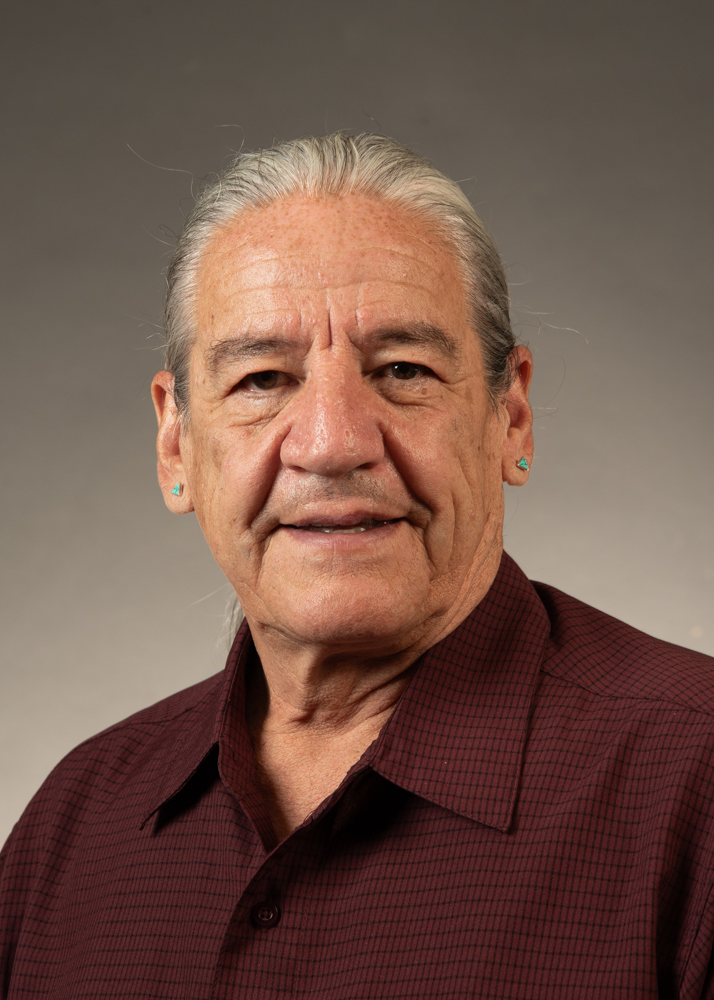
(
This is an article by Dakota scientist and healer J. Dallas Gudgell who braids together the real-world example of the restoration of buffalo with a more general principle of relational, inter-species responses to Metacrisis. It is part of a series of essays about how our psychological & social transformation are tied to the ways that we frame and attune to the biosphere. The selections have been curated by Zhiwa Woodbury' who wrote the first piece on Toward a Gaian Psychology.)
⛭ ⛭ ⛭
IN THE SUMMER OF 1861, PLAINS TRIBES CUT THE WIRE that would become the transcontinental telegraph, connecting the east coast of the United States to the western ‘frontier’ later that year. I suppose they severed this ‘whispering wire’ for many reasons, both esoteric and practical, and they would continue to silence the talking wire with increasing frequency after the 1864 Sand Creek Massacre of native people in what would become the state of Colorado.
On a practical level, the Tribes understood that this wire could summon the troops much more quickly than messengers on horses. But from a more esoteric perspective, the wire represented the impending onslaught from the papal “Doctrine of Discovery”, from the Supreme Court’s 1823 ruling in Johnson v. McIntosh, granting the U.S. government broad license to appropriate native lands, and other means of ‘progress’ (so-called by the dominant culture) that would soon enough serve to ravage the native people and culture of the Plains.
I also see the talking wire – and imagine my ancestors saw it this way – as the first of many technological tools that have served to increasingly separate humans from the natural world. Many of these tools were specifically intended, by design, to separate us from the natural world. While often viewed as progress, the relatively rapid adoption and widespread use of these technologies not only served to sever us from our natural surroundings, it also reinforced the false notion of mankind’s dominance over nature.
This human-centric attitude detaches us from nature. It also detaches us from others in inhumane ways. It often also detaches us from ourselves. It detaches the human from the being. When our beingness, the being aspect of our species’ identity, is displaced, misplaced or detached at our spiritual core we are left in a profoundly unnatural and floundering state, ultimately giving rise to the existential conundrum of the metacrisis.
Industrial-era human exceptionalism and similarly unjustifiable hubris have only exacerbated this grievous separation from nature and being. The unfortunate muck we humans collectively find ourselves mired in today was, I like to think, presciently audible in the coded buzz of that whispering wire. We first peoples are, after all, renowned code-breakers!
A Time of Crisis Long Prophesied
In November of 2023, during the season when every wild bison cow of age is carrying the next generation to term, eleven Native American Tribes convened for a Buffalo Summit to consider the spiritual significance of our four-legged relatives, and to envision the regeneration and restoration of the Yellowstone ecosystem. Remarkably, during the subsequent calving season, on June 4, 2024, a rare white buffalo calf was born unto the last remaining continuously wild buffalo herd, in Yellowstone National Park. When this calf’s hooves hit that sacred ground, a millennia-old prophecy was thereby fulfilled: the return of the White Buffalo Calf Woman in the form of a white calf.
When the White Buffalo Calf Woman first appeared to the Lakota/Dakota/Nakota people, long ago, times were exceedingly harsh. The people were weak and hungry. White Buffalo Calf Woman brought with her teachings, gifts of knowledge, critical understanding of natural law, and the means of abundance. When White Buffalo Calf Woman left us, she promised to return in the far distant future, at a time when we would once again be facing great difficulties and challenges. She said she’d return as a white buffalo calf at a time of great strife, division, and false profits, when Earth was sick with fever, and when the two-leggeds had forgotten the teachings of natural law.
Buffalo have always been central to First Nations across Turtle Island - or what is now known as North America - and their decimation has been central to our shared trauma. I’m convinced that the eradication of buffalo, as a tool of genocide and ecocide, still holds the key to unacknowledged and unintegrated collective traumas indigenous people carry, and by extension, which all Americans carry, including 400 years of slavery followed by the Civil and the Indian wars. The consequences of failing to face these traumas are paralyzing our culture in the face of existential threat - the “strife and division” prophesied by White Buffalo Calf Woman.
In many ways, we can say that the beating heart of this country’s unresolved collective trauma is right there in the world’s first national park, embodied in the last surviving, remarkably resilient herd - this keystone species - which may well help explain why Yellowstone remains such a magnet for Americans everywhere. It is for this reason, among many others, that Native American Tribes must and will play a key role in reversing global warming and regenerating the land in partnership with this and other keystone relatives.
The cure for healing trauma is found closest to the wound. The white European man’s myths of ‘discovery’, progress, and the American Dream ring hollow in these perilous times, while the prophecies of my people and Indigenous peoples all over the world have entered a time of fulfillment. To us, the wilderness was never wild. Harsh at times, certainly, yet largely a loving and safe place that provided all my ancestors needed to survive. According to the prophesies, now is the time for us all to come together to heal Mother Earth and, in the process, to become a whole.
We can't bring back the children buried at institutional schools. We can’t bring back the vast numbers of missing and murdered native women over the past decades and centuries. In addition to this ongoing epidemic of violence against native women, the challenges faced by this land’s original occupants are still daunting: enforced poverty; the core meltdown of cultural identity; oversized rates of incarceration, substance abuse, and suicide; continued separation from our aboriginal food sources - a form of cultural genocide under international law; and, extraordinary rates of diabetes and heart disease that flow from that forced dietary change and impoverishment. The inherited knowledge of our ancestors' bones that we walk upon today is a daily reminder of our generational trauma and the need we share with Mother Earth to heal and recover.
And we cannot fully recover in isolation from the dominant culture. Nor will the dominant culture be able to regenerate the land without reconciling with us. There is a natural form of reciprocity at work in this troubled relationship. Simply stated, trauma arises in relationship and must be acknowledged and resolved in relationship. European culture, African American descendants of slaves, Native American Tribes, and climate keystone species like buffalo, wolves, and beavers are being called by our common Mother, Earth, to come together and heal in this time of profound crisis, a time that asks each of us to answer the question “what does it mean to be human?”
We can bring back the buffalo - and already are doing so, thanks to Tribal leadership and the efforts of dozens of Tribes with the closest connections to Yellowstone. We can restore Buffalo Nations - the Pte Oyate - along with the sacred relationships and ancient contracts among native peoples and our buffalo relatives. Restoring these natural relations, after a century of enforced separation, will also help to restore my people’s buffalo lifeways. Restoring our cultural traditions in a contemporary way can heal this collective trauma that we all share, whether we’re descended from perpetrators or victims.
We are not bound by the mistakes of our ancestors.
A great healing among native peoples is the first step in integrating traumas and atrocities complicit in U.S. history, and buffalo are the most critical ally along this ‘red road’. I would even go so far as to say that an honest examination of the treatment of native peoples and buffalo, together, would catalyze a profound healing process for America itself - something desperately needed in these culturally troubled times - our own united nation’s version of ‘truth and reconciliation’, one that includes Mother Earth’s nature rights and the personhood of ALL her children.
What have we got to lose?
The attempted eradication of buffalo as an integral part of the attempted genocide of native people, justified by the Catholic Church and the U.S. Supreme Court under the “Doctrine of Discovery,” (and its surrogate, manifest destiny) is the most prominent example of the colonial drive toward white Christian supremacy over native people and nature. This moment for buffalo, Tribes, and climate scientists is more than the fulfillment of ancient prophecy - it’s a golden opportunity to change direction by inviting a necessary and urgently needed course correction in the human endeavor.
The Great Corrective Lens of Two-Eyed Solutions
To be clear, I’m not saying the Lakota/Dakota/Nakota people have it all figured out. We don’t. What we do have is a lot of experience surviving and adapting to collective trauma, by virtue of our troubled relationship with colonization over the past 300 years. Before that, we had a much longer, earth-based relationship with place, which has taught us all about resilience and the wisdom of reciprocal relationships with the natural world. We’re still here, in part because long ago we wove the wisdom of sustainable practices into the fabric of our cultural, social, economic, and civic life ways.
Globally, it can be said, Indigenous peoples are the living experts on how to restore right relationships with ‘all our relations’, and thus how to regenerate natural ecosystems and bioregions - including how to prosper from key alliances with our non-human relatives. Having inhabited these lands for thousands of years, not just centuries, it is practically encoded in our genes. I see tribes in the Amazon telling the world that the Earth is in trouble; they hear it by listening to water. One of my elder teachers told me that the water talked to him of the future as well, and the water told him, “I will look like water, but you will not be able to drink me.”
To this day, my tribe - in spite of all the unresolved trauma - still maintains a vital cultural-social community context through stories, language, and understanding of the earth as a living, sentient being, a mother who still loves all her glorious creations - including humans - in this great big beautiful and mysterious web of love, respect, and reverence.
We are meant to thrive on this planet, not just to survive.
Cosmologist James Lovelock stumbled upon Gaia theory, then developed it with the microbiologist Lynn Margulis in the 1970s, which has enabled Western science to ‘rationally’ recognize Earth as the living organism Indigenous people have always known her to be - a living being that we humans are part of, not apart from. My people’s, and globally many other Indigenous peoples, cultural stories, myths, and prophecies foretold these times we are in: scientifically, a polycrisis; socially, a metacrisis.
We are now confronted with various choices. The past choices of the post-industrial age and the enduring current path are not sustainable. By contrast, these ancient stories, told under the stars, provide sustainable choices at their heart. They illuminate a path that is naturally and reciprocally sustainable at the social, civic, community, and economic levels.
Will we humans listen to the Earth’s wisdom? Will we choose depletion or abundance? Degeneration or Regeneration?
These living traditions the world over, whose common archetypes the scholar Joseph Campbell documented with astonishment, can and should serve as a guide for all of humanity. That was their intent and design.
Ancient animal archetypes and alliances are quite ubiquitous in these stories, all across the varied landscapes, seascapes, and habitats of the planet. What can we learn from these animal archetypes that might help us survive the metacrisis?
For starters, there are many creation stories we can learn from in the recovery of human nature and being. Was the universe created in a Big Bang or in a Big Love? In many cultures, including Lakota/Dakota, the moon and the sun are brother and sister. A creation story I was told many times was that of Father Sky, Wankatakiya, and Mother Earth, Maka Ina (or Unci Maka, grandmother earth). They had a great romance. This great romance was so big it could not be contained. This big love spilled out in the form of many children. The children of this big love had roots and fins, two legs and four legs, wings and no legs; some creeped and crawled, others flew and swam. In this way, all things are connected. We are all related. All things are part of the big love and this big love lives inside all things. Modern scientists call this “panpsychism,” and it is considered cutting-edge in the philosophy of consciousness. It stands to reason, then, that there is a collective consciousness as well. Call it what you will: one mind, one heart, one spirit, one soul, one love. It’s a unifying force we can draw on at will.
American physician and poet, Lewis Thomas did not see science as the root of wisdom; rather, that another, perhaps more evolved, science still awaits. “We need science, more and better science, not for its technology, not for leisure, not even for health or longevity, but for the hope of wisdom which our kind of culture must acquire for its survival.”
Reconnecting to and reestablishing our old reciprocal relationships to the natural world and to our non-human relatives begins the global healing process. Free-roaming buffalo under indigenous management are a means to holistically repair, and rather quickly restore, ecological health. In fact, as a matter of science, Indigenous-led efforts like these with only 20 large mammal assemblages, or “climate keystone species”, all around the world have now been identified as the quickest and most effective way to reverse global warming while we transition away from fossil fuels.
In contrast to the more recent materialist science of separation and experimentation, which still views climate change largely as a greenhouse gas equation, the indigenous wisdom encoded in my people’s “traditional ecological knowledge” has been acquired over thousands of years, by the inherently scientific practice of keen observation while living as embedded creatures on the land, noticing and recollecting changes in and in relationship with the natural world in its natural state - which includes us as participants, not just observers - and making the necessary connections and adaptations along the way, according to the non-negotiable rules of nature and natural law. It is a passive inquiry exercised with great patience, and it has yielded a most reliable kind of embodied wisdom.
Of course, theory, hypothesis, and resulting experimentation in the lab or in the field has its ‘place’, too. But is it inherently wise? As even giants like Einstein and Oppenheimer recognized, it does not always lead to wise outcomes. There is so much we don’t know and so much we can’t explain. Einstein called subatomic entanglement, in the blossoming exploration of quantum mechanics/physics, “spooky action at a distance.” So much wonder, so much mystery!
For indigenous cultures, “why” is often not the most pressing question. We are comfortable with not knowing. By simply observing and being, we are rewarded with other ways of knowing. Listening to the water or listening to the stars, for example. The key, according to more recent and ethically grounded approaches, is to combine the best of these contrasting scientific methods in order to find “two-eyed” solutions to the unnatural problems technology has unwisely engendered.
While Buffalo are our best hope, U.S. treaty culture must chang
At this critical moment in history, some consider all treaties between tribal nations and the U.S. federal government to be broken. As a result, the entire land base of the U.S. is ostensibly under occupation by settlers. which is why “land acknowledgments” feel so inadequate to those of us in the Landback movement.
Unfortunately, these broken treaties, forged in an earlier era of race-oriented democracy, still inform US treaty culture globally. Under notions of “exceptionalism”, by which international law seems to apply to everyone except them, the U.S. regularly breaks international agreements and treaties, refuses to sign popular treaties altogether, pulls out of treaties and agreements that become inconvenient, and refuses to ratify or observe international treaties they sign onto. See, e.g., climate positive initiatives, climate reparations/loss and damage, greenhouse gas emissions reduction, the Paris Accords, strategic arms reduction (the series of START treaties), nuclear testing (CTBT), International Criminal Court, and the U.N. Declaration on the Rights of Indigenous Peoples. While the current U.S. Supreme Court has acknowledged the superiority of Tribal sovereignty in important ways, the current and historically unpopular U.S. administration seems to consider treaties not worth the paper they are written on.
This chaotic moment for multilateralism offers an opportunity for North American Tribes: We are entering a new treaty era of bi-national and tribal nation-to-nation treaties that operate on the land without the need to seek approval from the U.S. or Canada, exercising the sovereignty accorded us under the U.S. Constitution, with our own land and animal ethics at the core. Starting with a
Buffalo Treaty that seeks to exercise tribal sovereignty over management of our aboriginal food source and our spiritual heart. We are Buffalo People, and the symbiotic relationship between Tribes, bison and the land is not only sacred, it is the key to our survival as a people and to all of our ability solve the climate and biodiversity crises.
Buffalo’s life lessons
Simply propping ourselves up on chairs separates us from nature. While a wire that instantly expands our ability to communicate across 2,000 miles may have promised to connect us all, just look at the level of global dissociation and disconnection that mass communication has wrought today. My ancestors saw that coming. They foresaw the potential magnitude of separation and alienation that commodity extraction and separation from Earth would ultimately bring. They even anticipated the day when our own lifeways and wisdom would once again be urgently needed.
That day has come.
What are some other ways we humans are becoming disconnected from the natural world? Do we not have any agency in this regard? In what ways do technology and ideologies of supremacy, all in the name of progress, dehumanize groups of people? What are the kinds of powers that allow us to rationalize genocide? What is the magnitude of trauma created by these repeated and continuing campaigns of genocide and ethnic or religious supremacy? How many generations are affected? How can we reverse the outsized violence against native women – missing and murdered today? How may we two-leggeds address, integrate and heal all this collective trauma?
These questions are very present for my people as part of this metacrisis. We’ve witnessed first-hand too many instances and campaigns of brutal, state-sanctioned murder, displacement and deportation. We’ve seen the cruelty of forced famine and ecocide as tools of war and genocide. And yet, native people have persisted, against all odds, and the buffalo remain with us as well. That we Buffalo People and buffalo, too, are both still here is a striking example of resistance and resilience in the face of overwhelming trauma, a shining example of the spiritual principle that the forces of darkness can never entirely snuff out the light.
In fact, our ceremony often makes use of the dark light for healing. We use the dark light to integrate trauma, integrate shadow, go into our individual internal worlds and integrate our own shadows. There is a lesson here for all of us at a time when resistance and resilience are so critical to our survival as a species.
The buffalo grazing on Tribal lands throughout the Western U.S., enabled in part by the Yellowstone bison transfer program run by my Tribe, is a living symbol of cultural pride among our people. Empowered by this restored relationship, today native Tribes all across the country are returning to our traditional lifeways. Our reconnection with buffalo is catalyzing a resurrection of cultural dignity and self-esteem. Kids on reservations now can envision a future for themselves, breaking cycles of shame and substance abuse that have plagued us for generations - ever since the buffalo was taken away from us.
What lessons can the buffalo teach all of us in this time of crisis?
The buffalo are biological engineers that play a positive role in enhancing degraded landscapes. Yellowstone’s large, free-moving bison herds provide a glimpse of their past ecosystem-balancing function as they move across the land every Spring (
Science, 28, Aug, 2025). Once reintroduced onto decadent grasslands, wild bison trigger a trophic cascade of ecological recovery that is well documented, not unlike what transpired when wildebeests of the Serengeti were freed from cattle-borne diseases that had depressed their populations.
Aside from the magic trick of biological restoration, buffalo can teach us ways of working together in community for the greater good of the herd. As you may have seen in countless nature documentaries, the lead buffalo community member plows through deep snow, creating a path for the herd. When tired, the lead steps aside and the next member takes over, and so on. The biggest and strongest bulls swing their large heads side-to-side to remove the snow, so the whole herd may eat the grass beneath (sometimes females repeat this practice). They migrate across the land, just as humans tend to do, never lingering too long in one place. By contrast, cows linger in riparian areas, damaging their home by overuse, and harming many other species in the process.
Buffalo mourn their dead. They also know how to grieve and metabolize trauma. And when a big storm approaches, instead of shying away, the herd faces into the storm in order to get through it as quickly as feasible.
Facing hard times with a focus on the greater good for all is a valuable lesson for us humans.
In short, buffalo are cooperative, working together for survival and thriving. Perhaps the most important lesson for our time is the matriarchal nature of the herd. The mothers lead the herd, teach the young, manage their movement, and direct their migration. Buffalo bulls honor the feminine, the giver of life, an example of and homage to the feminine Earth mother as the giver of life. Think how much modern society would benefit if our youth sat at the feet of their grandmothers in love and with respect, absorbing the wisdom encoded in all the stories of the ages.
A Relational Approach to the Meta-Crisis
The buffalo’s best hope is a return to the reciprocal relationship with the indigenous people with whom they co-evolved over millennia under tribal stewardship and management. The most direct path to bring the buffalo back is the exercise of tribal sovereignty in full management of buffalo herds’ tribal and public lands, like the national forests that surround Yellowstone National Park and public pastures and prairies of the West, where the Supreme Court in a 2019 case (Herrera vs Wyoming) recognized the primacy of Tribal Sovereignty over State rights in relation to fish and game and native plants.
This augurs in favor of LandBack by any means: gifts, returns, purchases, and acquisition of federal grazing allotments devoted to wild buffalo conservation, and recovery of all the many species that buffalo lifeways support, like sage grouse, burrowing owls, prairie dogs and black-footed ferrets, to name just a few. It is this ‘trophic cascade,’ in turn, that draws down massive amounts of greenhouse gases -more than enough to potentially offset even the currently excessive U.S. emissions.
We now know that the settler/colonial post-industrial structures that are generally extractive, commodity-based, and largely transactional have proven to be unsustainable. These structures ignore or subvert nature's laws and break the interconnectivity of the natural order. They take from Earth without the reciprocal giving and replenishment that Gaia’s homeostasis demands over time. This transactional approach is a lethal threat to a living planet. Natural law demands that we correct this structure if we are to survive and, eventually, thrive as a keystone species ourselves.
In stark contrast to this ‘power over’, taker mentality, indigenous lifeways are relational. North America’s Indigenous peoples and First Peoples globally lived close to the earth, by design. As I learn more about indigenous lifeways globally, I see many similarities to the Plains tribes. All indigenous cultures - and we were all indigenous at some point in our lineages - lived in harmony with the land, the waters, and with all living creation. Indigenous lifeways of the Pte Oyate are founded in simplicity and reciprocity: people only took what was needed, and even then gave something in return out of gratitude. We understood with reverence the reciprocal nature of sacrifice – as with “an honorable harvest” of buffalo, in the words of native scholar and scientist Robin Wall-Kimmerer.
The humility inherent in this reciprocal contract and structure is not only sustainable, it serves as an antidote to the extreme arrogance and, at least in relation to nature’s ways, ignorance of the marauding, Colonialist mindset that continues to wreak so much havoc on the land, at sea, and in the air. The balance that is observed in implementing our lifeways serves, and is in accord with, Gaia’s natural homeostasis. It is not only natural, in other words, it is good science.
What is sorely missing from post-industrial economic, social, civic and political structures is this kind of honest relationship, deep humility, warm-hearted community, wise reciprocity, respectful reverence, resilience and personal responsibility. All these are signs of a mature human being, collectively observed, and could lead humanity into a mature civilization, rather than tearing ourselves and the planet apart in the kind of adolescent rage and petulance we see playing out on the world stage right now.
These, in brief summation, are the principles of indigenous conservation and land use that inform two-eyed solutions to the daunting metacrisis. Isolating particular aspects of the crisis for purposes of finding solutions, as for example with solely focusing on fossil fuels, is the old, failed separatist model of science that dissects things and serves to separate them. And dare I mention the other sorely lacking element: spiritual connection to the ghost road where all souls are one.
These are just a few of the lessons to be remembered and relearned.
The scientific materialist approach is failing us miserably. This series on the Gaian Psychology approach, in which this piece on the vitality of indigenous lifeways fits quite naturally, represents a much more holistic and mature scientific way of thinking about our shared crisis, one that doesn’t end up creating more problems than it resolves. Paraphrasing Naomi Klein, climate change changes everything, and thus the solutions have to include everything about how we live our lives and think of our role on this living planet.
Indigenous leadership in the climate crisis
By deleterious design, Indigenous people globally are locked out of decision-making and leadership in the elite structures - like COP30 and biodiversity COP 16 - that are ostensibly seeking solutions to global heating and biodiversity loss. This has to change sooner, rather than after it is too late. Indigenous leaders must be welcomed at the decision-making tables, and encouraged to bring creative ideas, braiding ancient indigenous wisdom and ecological knowledge into climate solutions, on equal footing with Western science, technology, and nations.
Youth are also locked out of both the climate and biodiversity Conference of Parties. Yet they, too, must have a place at the table as a powerful voice in making the changes required for their thriving future and to remedy the past harms we receding generations have left for them. The youth have much more at stake than any of us.
Maybe what is needed at this critical time in our collective evolution is a binding treaty between humans and Mother Earth. As my friend Zhiwa Woodbury, a former attorney, likes to say, if nature has rights, as more and more countries are recognizing, then Gaia must be the ultimate sovereign. Let’s give her a seat at the table as well.
Oglala Lakota Chief Crazy Horse had an instructive vision. One of the many things he related from his vision was that the Lakota will be called upon to teach and lead toward the knowledge and understanding of unity among all living things:
“A world filled with broken promises, selfishness and separations. A world longing for light again. I see a time of seven generations when all the colors of mankind will gather under the sacred Tree of Life and the whole Earth will become one circle again. In that day there will be those among the Lakota who will carry knowledge and understanding of unity among all living things and the young white ones will come to those of my people and ask for wisdom. I salute the light within your eyes where the whole universe dwells. For when you are at that center within you and I am in that place within me, we shall be as one.”
- Source: Navajo Times 1/22/22, Guest Essay Kenneth G. White, Jr.
Crazy Horse’s vision speaks not only to the Lakota but to every lineage that still holds the memory of interbeing. His prophecy of a “world longing for light again,” and of all peoples gathering beneath the Tree of Life, echoes across Indigenous cosmologies: the Haudenosaunee’s affirmation that “now our minds are one,” the Navajo hózhǫ́ — harmony, beauty, balance — and the living truth found in the Upanishads: tat tvam asi, “you are that.” Each teaching points toward the same recognition: the divine, the sacred, the whole universe dwells at the center of each being. When we meet one another from that center, separation collapses; the circle is restored.
In this moment of rupture, ecological unraveling, and political fracture, Crazy Horse’s prophecy reads less like distant legend and more like timely instruction. The Lakota and many other Indigenous nations carry ways of knowing grounded in unity, reciprocity, ceremony, and the remembrance that land, people, and spirit are not three things but one. And as Crazy Horse foresaw, the “young white ones” — disillusioned by the hollow promises of modernity — are now turning back toward the very wisdom traditions that Western civilization has tried to extinguish.
In Crazy Horse's vision, he tells of a time of peace after a time of chaos and hardship. He advises that one of the conditions that will come to pass during this time of chaos is that the north will touch the south and the east will touch the west. Much like the telegraph pretended/portended. Much like the ravages of the climate crisis now touch all corners of the planet. And much like the Global North and the Global South must come together now for there to be any climate justice going forward.
The Great Correction – White Buffalo Calf Woman’s World
The rare white buffalo born in Yellowstone after 11 Tribes came together to discuss the spiritual significance of Yellowstone’s wild bison and land was welcomed with tribal ceremony, given the Lakota name
Wakan Gli, which means "Returns Sacred”, and was featured in the
New York Times, alerting us that ‘that time’ is now.
White Buffalo Calf Woman said that when she reappears, there will be a fork in the path and a choice for the two-leggeds. One path leads to fire, flood, destruction, and pillaging. One path leads to green, lush and abundant valleys.
Now is the time and we need a great correction.
As Chief Arvol Looking Horse, spiritual leader and keeper of the sacred White Buffalo Calf Woman Pipe and Bundle, said at the white calf’s naming ceremony: “It’s up to each and every one of you to make it happen for the future of our children. We must come together and bring that good energy back.”
The great correction may well look like free-roaming buffalo under indigenous management and the holistic repair of ecological health. An earth healing. A four-legged healing. A two-legged healing.
Tribal nations have shared much suffering upon suffering, as Crazy Horse noted. They also have shared ceremony and a oneness with each other and with their non-human relatives. So important were the buffalo that tribal nations helped one another with shared ceremony as those buffalo populations declined. For example, Paiute Chief Wovoka had a vision of the Ghost Dance. The Ghost Dance provided hope and the belief that the dance could bring back old spirits of the people, giving the nations strength to overcome their suffering and to return to the old ways of life - not the reservation way of life. The hope was that the dance could bring back the buffalo.
It’s possible that the ghost dance is working.
⛭ ⛭ ⛭
Post-Script from the Front Lines of the Climate Crisis
Recently, I was in Colorado pursuing the spark of a LandBack and buffalo rematriation project. I met an Uncompahgre Ute fellow. We talked and connected on many levels. I visited a small museum in Aspen where he volunteers and teaches Ute culture and tradition. I noticed in the museum what looked like an old rendering of a Sundance scene honoring, among many, many things, the tree of life, the sacred hoop, or circle of life - the connectedness of all things - and both the suffering and replenishing of the people and of the earth.
I said to my new friend,“I didn't know Utes did the Sundance.” He said, “Yes they did. They got the Sundance given to them by the Paiute.” I said, “Well what do you know? We Lakota/Dakota gave the Sundance to Chief Wovoka and the Paiute in return and gratitude for the gift of the Ghost Dance.” (See, e.g.,
Our History is the Future, Nick Estes to learn more on the Ghost Dance). Our ancestors were taking care of each other then, too. We humans, all of us, all colors, must take care of each other now.
The great correction could look like the equal recognition, application and implementation of traditional ecological knowledge and western science braided or woven together to access the hope of wisdom. The path forward is not just innovation but also remembering; not extraction, but relationship. A return to the sacred hoop that was never truly broken - only forgotten.
“Out beyond ideas of wrongdoing and rightdoing,
There is a field. I’ll meet you there.
When the soul lies down in that Grass.
The world is too full to talk about.
Ideas, language, even the phrase each other
Doesn’t make any sense.”
~ Jelaluddin Rumi